Product suitability
Review rheology, temperature, solids, crystals, air contact and hygiene. Identify limits before selecting hardware.

Pneumatic pump systems
The right vessel is part of the answer. Successful transfer depends on the complete route, utilities and operating logic.
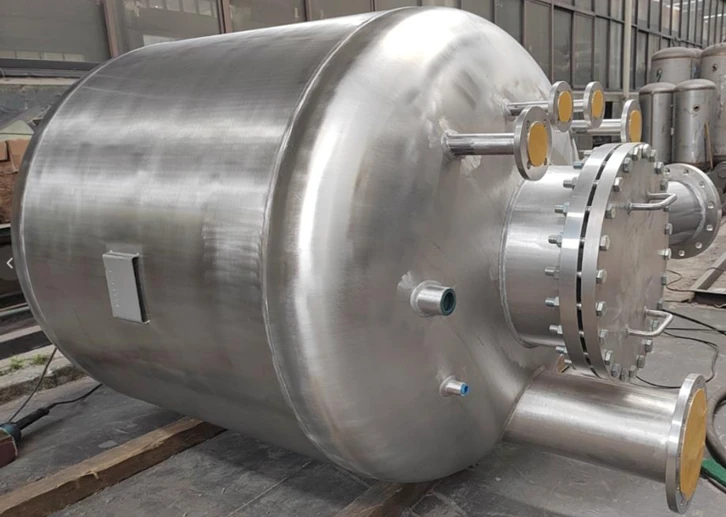
Review rheology, temperature, solids, crystals, air contact and hygiene. Identify limits before selecting hardware.
Check the required flow profile against vessel fill volume, total cycle time, elevation, pressure losses and receiver conditions.
Evaluate sustained compressed-air capacity, conditioning, separators, controlled venting, noise and potential pipeline vibration.
Agree interlocks, single-vessel fallback, documentation, factory tests and site acceptance criteria.
| Parameter | Engineering basis |
|---|---|
| Vessel working volume | Sized from required average flow, usable fill volume and cycle time; 2 m³ is one documented project example. |
| Wetted materials | 304, 316 or 316L stainless steel; other materials require a compatibility review. |
| Pressure & temperature | Project-rated pressure vessel and operating limits; confirm the actual design pressure, temperature and destination code. |
| Valve arrangement | Application-selected feed, discharge and air valves with suitable seats, actuators and position feedback. |
| Control platform | PLC + HMI; Siemens S7-1200 and Siemens/MCGS HMI options are described in the source package. Final bill of materials is agreed at quotation. |
| Available options | Dual-vessel coordination, hygienic finish, CIP module, vacuum assistance, insulation and remote support, subject to duty review. |
START WITH THE DUTY
Share the current pump model, maintenance problem and operating duty. Compare a pneumatic system against your existing installation using measured process data.
