No rotating pumping element
Compressed air provides the driving force. The transfer vessel has no rotating pumping element or mechanical shaft seal.

Pneumatic pump systems
A complete liquid-transfer package, powered by compressed air and coordinated by an automatic control system.
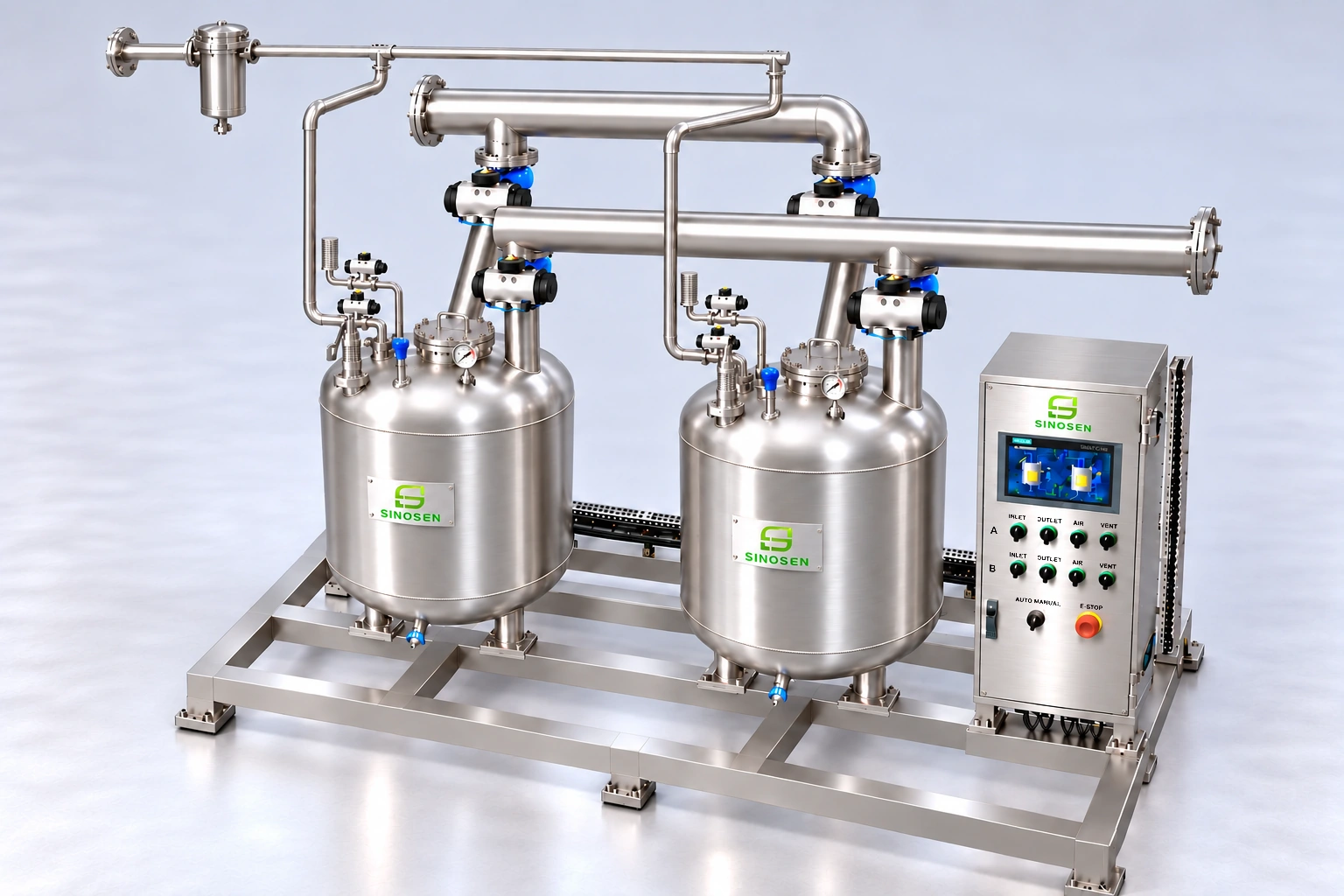
Compressed air provides the driving force. The transfer vessel has no rotating pumping element or mechanical shaft seal.
One vessel fills while the other transfers. Coordinated switching supports continuous upstream feeding within the engineered duty.
Vessels, valves, instruments, pipework and control cabinet arrive assembled on a common frame for the agreed skid package.
The sequence and agreed interfaces are checked before dispatch. Defined site connections and remote support simplify start-up.
A suitable A/B arrangement can continue at reduced capacity with one vessel isolated. Level and time modes support an agreed fallback strategy.
Select hygienic or industrial construction, stainless steel grade, insulation, vacuum-assisted filling and an optional CIP module.
Choose the construction standard and arrangement around your process. Hygienic or industrial describes the configuration, not an automatic certification.

Product-contact finish, air treatment and cleaning provisions specified for the hygienic duty.
Explore the solution↗
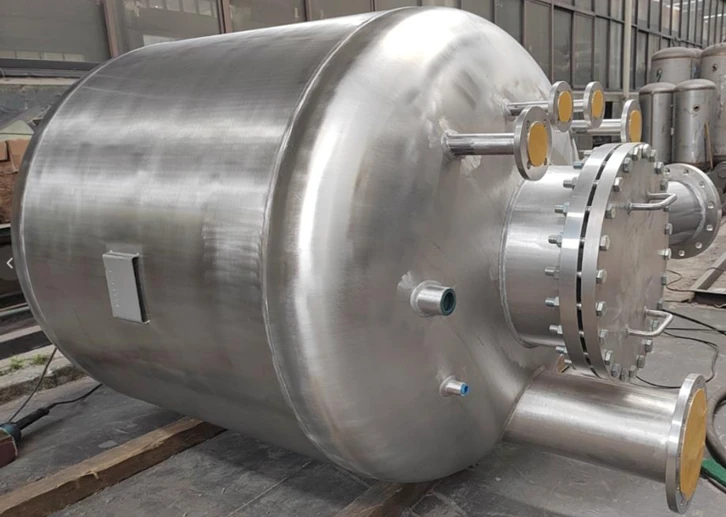
A robust pressure-vessel system configured for compatible industrial transfer duties.
Explore the solution↗
Twin-vessel sequencing, factory assembly and integrated control in a transportable package.
Explore the solution↗| Parameter | Engineering basis |
|---|---|
| Vessel working volume | Sized from required average flow, usable fill volume and cycle time; 2 m³ is one documented project example. |
| Wetted materials | 304, 316 or 316L stainless steel; other materials require a compatibility review. |
| Pressure & temperature | Project-rated pressure vessel and operating limits; confirm the actual design pressure, temperature and destination code. |
| Valve arrangement | Application-selected feed, discharge and air valves with suitable seats, actuators and position feedback. |
| Control platform | Siemens PLC and HMI preferred. Instruments from Yokogawa, Endress+Hauser or Baumer and application-selected valves may be specified. Final manufacturers and models are agreed in the bill of materials. |
| Available options | Dual-vessel coordination, hygienic finish, CIP module, vacuum assistance, insulation and remote support, subject to duty review. |
| Pressure-vessel design reference | 1.0 MPa is a source configuration reference. Actual design pressure, temperature, working pressure and destination approval are specified for each project. |
| Hygienic finish option | Mirror-polished product-contact surfaces, with an Ra 0.1–0.2 µm option subject to manufacturability, agreed measurement method and inspection scope. Finish alone does not establish hygienic certification. |
| Valve wear options | Application-selected nickel-based tungsten-carbide cladding or DLC coating, subject to compatibility, coating location and valve qualification. |
No. SINOSEN uses a pressure-vessel transfer system. Compressed air acts on the liquid in the vessel; an automated valve sequence controls filling and discharge. It is also different from pneumatic conveying of dry powders.
It is a design reference for a vessel configuration, not a universal operating pressure or a guaranteed delivery pressure. Each project needs an approved vessel rating and operating envelope appropriate to the destination and duty.
START WITH THE DUTY
Share the current pump model, maintenance problem and operating duty. Compare a pneumatic system against your existing installation using measured process data.
